Choose gooseneck in die casting includes material selection, shape and function, operation mode and so on.
The gooseneck is the core component of hot chamber die casting. Its main function is to connect the molten metal pool and the mold cavity. And inject the molten metal into the mold through the piston rod.
Choosing a suitable gooseneck requires comprehensive consideration of multiple factors. Such as specific process requirements, material properties, production efficiency, and economy. For example, for high-precision and complex-shaped castings, it can select a swan neck type gooseneck. For small castings that produce repeatedly, it can consider a dedicated customized gooseneck. In addition, ensuring the heat resistance and maintenance convenience of the gooseneck material is also a key factor.
Process requirements
The design and material of the gooseneck directly affect the quality and production efficiency of the die casting.
For example, for castings that require high precision and complex shapes. You can choose a gooseneck with a special design. Such as a swan neck gooseneck, which can achieve higher precision.
Injection Volume and Speed
- It is crucial to ensure that all metal is injected within the specified filling time to avoid insufficient injection volume due to a small orifice, which can cause material shortages or flash.
- High-speed filling (>30 m/s) is suitable for thin-walled (≤0.8 mm) and high-precision parts. A gooseneck with low flow resistance and uniform heating is required.
Pressure Range
- Hot chamber die casting typically operates at a pressure of 10-45 kg/cm² (approximately 1-4 MPa).
- However, high pressure (>30 kg/cm²) can improve filling integrity, provided the gooseneck structure can withstand the corresponding bending moment.
Temperature Maintenance
The metal residence time in the gooseneck should not exceed 2-3 seconds to prevent a drop in temperature. It can increase viscosity and cause pore formation. A heating sleeve or insulation layer is essential.
Flow Optimization
- By optimizing curvature, improving internal wall finish, and avoiding sharp bends, turbulence and oxidation can be reduced, improving metal flow and surface quality. Quality Control Metrics
- Key quality indicators include: flash rate <0.5%, porosity <0.2%, and dimensional tolerance ±0.02mm (depending on product requirements). The gooseneck design directly determines the degree to which these indicators are achieved.

Gooseneck in die casting application scenarios
Consumer electronics
Zinc alloy connectors, mobile phone/tablet housings, etc. require smooth surfaces and high dimensional accuracy. Linear or heated gooseneck die casting machines are often used for fast and stable filling.
Automotive parts
Magnesium alloy transmission housings, fuel system components, precision threaded parts, etc. require a balance of high strength and lightweight. Swan neck or modular structures are often used to control flow and reduce defect rates.
Hardware/daily necessities
Precision fasteners, pipe fittings, and internal structural components of household appliances often use linear or modular die casting machines for easy maintenance and replacement.
Small complex parts
Such as aviation instruments and medical device housings require extremely high internal flow control. S-shaped or swan neck die casting machines are preferred for optimal surface quality and minimal internal defects.
High-volum and fast mold filling
For mass production with stringent requirements for filling speed and accuracy (such as large-scale electronic housings), hot chamber die casting machines and their gooseneck die casting machines are the preferred solution.
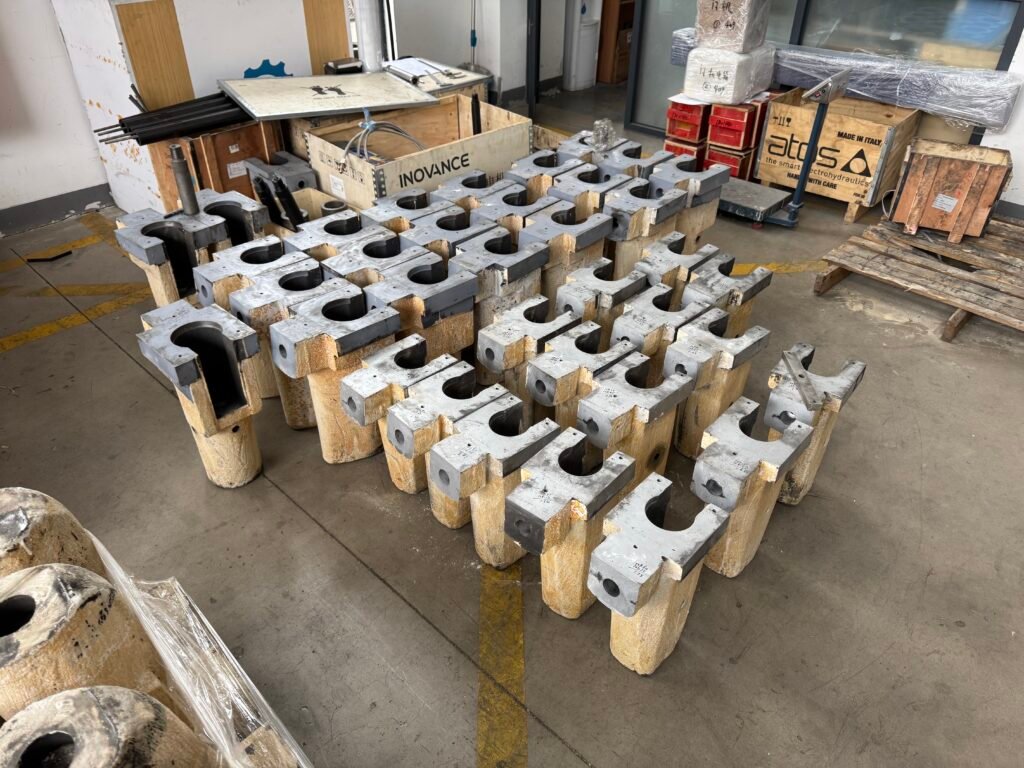
Material selection and heat resistance
The gooseneck is usually made of high-temperature resistant materials. Such as cast iron or forged steel, to ensure that it can operate stably. And for a long time in a high-temperature molten metal environment.
In addition, some high-performance goosenecks may also use special coatings (such as silicon nitride coatings) to improve corrosion resistance and service life.
Thermal Resistance
The lower the material’s thermal conductivity and the better the matching of its thermal expansion coefficient, the less deformation caused by thermal shock.
Mechanical Strength
Injection pressure is typically between 100–200 MPa, and a safety margin of at least 30% must be allowed for the material’s yield strength.
Wear/Corrosion Resistance
Long-term immersion in molten metal requires protection against metal erosion and wear.
Processing and Replacement
Forgings feature uniform wall thickness and are free of casting defects, resulting in a longer lifespan and easier maintenance.
Key Points in Thermal Resistance and Heat Dissipation Design
- Wall Thickness and Wall Thickness Transition
Using a gradual wall thickness (e.g., 5mm → 10mm) can reduce thermal stress concentration and prevent the “banana effect.” - Internal Lining
Wear-resistant steel linings (e.g., 1.2367) or ceramic linings are commonly used to improve heat and corrosion resistance. - Insulation/Thermal Insulation
Insulating sleeves (high-temperature ceramic fiber) are installed on the outside of the gooseneck to reduce heat loss and maintain the molten metal temperature. - Cooling System
For high-pressure aluminum die-casting, water or oil cooling channels can be installed on the outside of the gooseneck to control local temperature rise.
Shape and function of gooseneck
Depending on different process requirements, the shape of the gooseneck can divide into straight, curved and special customized types. For example:
Straight gooseneck
It is suitable for basic applications, simple structure and low cost.
Curved gooseneck
This is suitable for forming castings with complex shapes, such as U-shape or deep groove.
Special customized gooseneck
That shape of gooseneck is designed for specific needs, such as customized gooseneck for zinc alloy die casting machine.
Operation mode and flexibility
- Modern die-casting machines usually equip with flexible gooseneck control systems, which can adjust the position and angle of the gooseneck according to production needs.
- For example, some equipment allows the gooseneck to move up and down during operation to better control the flow of molten metal.
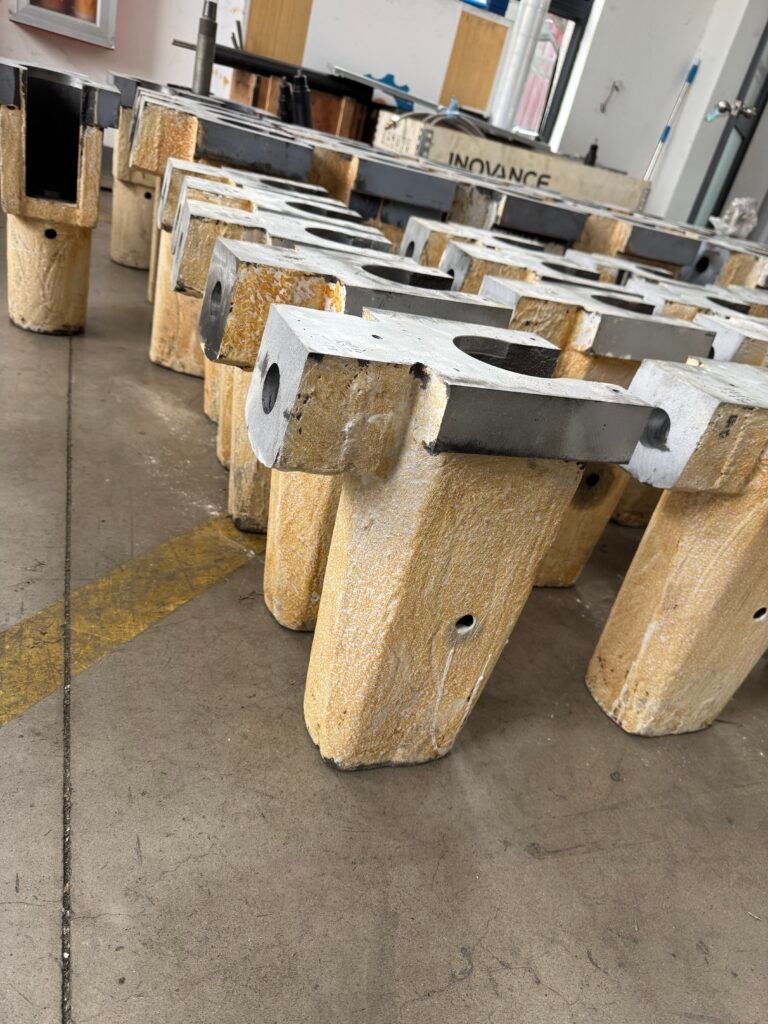
Maintenance and life
- The maintenance requirements of the gooseneck are high because it often exposes to high temperature environments. Therefore, when selecting a gooseneck, it should consider its durability and maintenance cost.
- For example, some high-performance goosenecks may need to be regularly replaced with coatings or heat treated to extend their service life.
Applicable materials and process limitations
Hot chamber die casting is generally suitable for low melting point metals (such as zinc, lead, tin, etc.). While cold chamber die casting is suitable for high melting point metals. (Such as aluminum, magnesium, etc.).
Therefore, when selecting a gooseneck, it is necessary to ensure that its material and design can adapt to the type of metal used.
Haichen gooseneck in die casting
- Solve Nozzle Blockage for a Zinc Hardware Maker
- Extend Gooseneck Life for a Magnesium Part Supplier
Solve Nozzle Blockage for a Zinc Hardware Maker
One zinc door handles manufactuer had frequent nozzle blockage. Production stopped often for cleaning. HAICHEN found their gooseneck had poor heating and a rough inner surface. We suggested a model with better heaters and a polished bore. Blockages became rare, and output rose by 18%.
Extend Gooseneck Life for a Magnesium Part Supplier
One producer produces thin magnesium parts for electronics saw fast gooseneck wear. Corrosion from the molten metal was the cause. HAICHEN provided a gooseneck made from a higher-grade, corrosion-resistant alloy. Its service life increased three times, cutting spare part costs significantly.
Economy and efficiency
For small castings that are produced repeatedly, it may be more economical to invest in a dedicated gooseneck mold. Dedicated gooseneck molds can reduce mold wear and improve production efficiency.
Haichen die casting machine
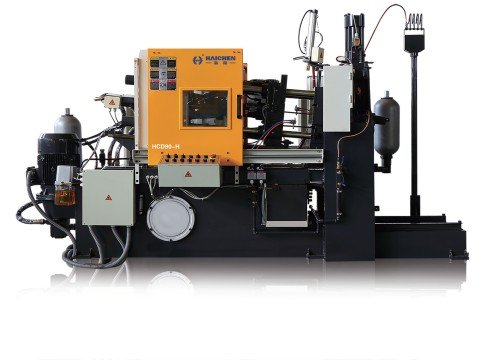
We are haichen, one Chinese die casting machine manufacturer. We produce both high pressure cold chamber die casting machine , hot chamber die casting machine and spare parts. They have durable and highly precise features.
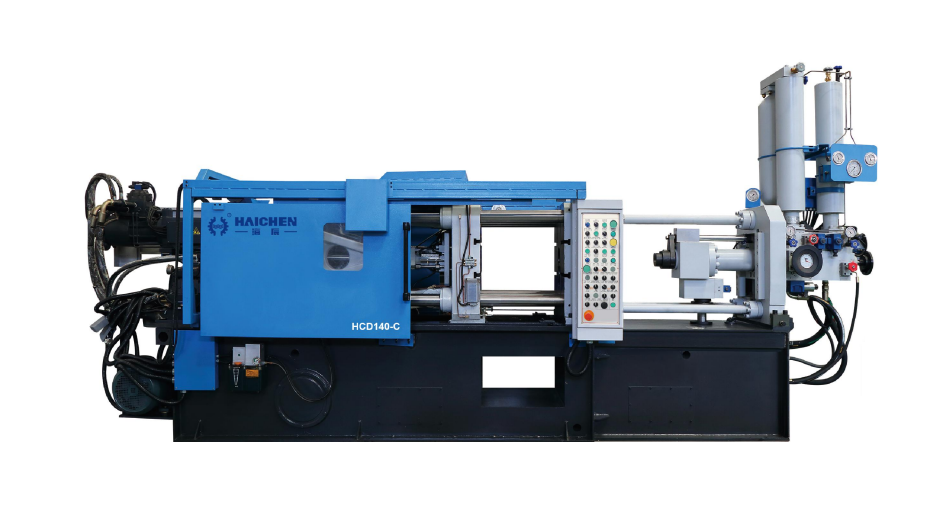
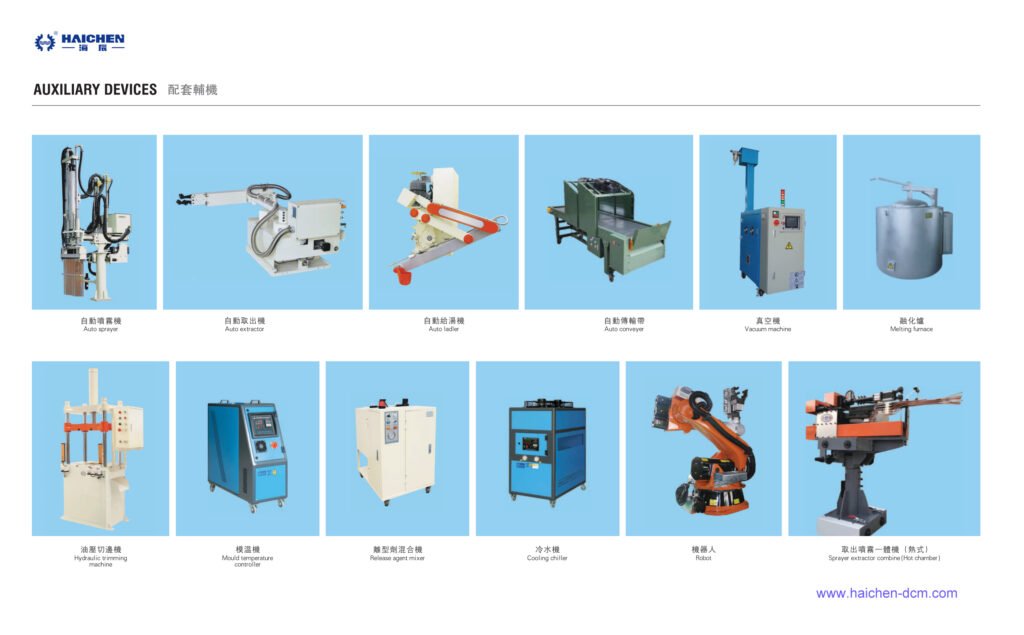
Haichen also produce die casting machine auxiliary equipment. Such as conveyor, vacuum machine, mold temperature controller, industrial robot, sprayer and so on.
We supply cold chamber and hot chamber die casting machine spare parts.
HAICHEN builds every part for reliability. We know the gooseneck is vital for hot chamber machines. Our goosenecks are designed for easy use and long life. They work perfectly with our machines’ control systems. This integration gives you stable temperature and consistent shots. Choosing HAICHEN means getting a complete, optimized system, not just separate parts. Welcome contact us.


